6 Impossible Things Before Breakfast
“I can’t believe that!” said Alice.
“Can’t you?” the Queen said in a pitying tone. “Try again: draw a long breath, and shut your eyes.”
Alice laughed. “There’s no use trying,” she said: “one can’t believe impossible things.”
“I daresay you haven’t had much practice,” said the Queen. “When I was your age, I always did it for half-an-hour a day. Why, sometimes I’ve believed as many as six impossible things before breakfast. There goes the shawl again!”
― Lewis Carroll, Through the Looking-Glass, 1871
In Lewis Carroll’s Through the Looking-Glass, Alice travels into a curious and thoughtfully backwards world. To get from one spot to another, Alice finds that she must walk in the opposite direction, and that running only makes her stay in place; for some characters, cause and effect are reversed, like when the White Queen feels herself prick her finger before it actually happens; and commonplace remarks and words are twisted and responded to in ingenious ways. Take this exchange between Alice and the King, for example:
“Did you happen to meet any soldiers, my dear, as you came through the wood?”
“Yes, I did,” said Alice: “several thousand, I should think.”
“Four thousand two hundred and seven, that’s the exact number,” the King said, referring to his book. “I couldn’t send all the horses, you know, because two of them are wanted in the game. And I haven’t sent the two Messengers, either. They’re both gone to the town. Just look along the road, and tell me if you can see either of them.”
“I see nobody on the road,” said Alice.
“I only wish I had such eyes,” the King remarked in a fretful tone. “To be able to see Nobody! And at that distance, too! Why, it’s as much as I can do to see real people, by this light!”
Or this one:
“I beg your pardon?” said Alice.
“It isn’t respectable to beg,” said the King.
“I only meant that I didn’t understand,” said Alice. “Why one to come and one to go?”
The logic Alice is so familiar with is transformed into unconventional and new ways of thinking in the looking-glass. In this world, Alice learns to observe her own ways of thinking and approaches to everyday life. She adapts beautifully to her new environment by listening closely and adopting novel approaches to reasoning and communication.
Alice’s encounter with the White Queen in Chapter 5, when the Queen states, “ Why, sometimes I’ve believed as many as six impossible things before breakfast,” sets her up for success in the remainder of the book, enabling her to approach the looking-glass world with a sense of absurdity and play, rather than rigid rationality. Her strange encounters create a roadmap through the looking-glass, landmarked by absurdity and ingenuity, which leads to ingenious and imaginative methods of critical thinking. Back in the world of the provisionally logical, we can still render useful the White Queen’s word of wisdom to navigate our own world, develop new ideas, and strengthen creative projects.

Ideating, Journaling, and Storyboarding
The concept of believing six impossible things before breakfast has always amused me. As someone who struggles to get started on projects, this has become a fun exercise to get words, and especially ideas, flowing. This approach can be useful when ideating about a specific project or when generating ideas more broadly. Let’s say you’re brainstorming a new approach to an art form or technique for an art form. Thinking of 6 seemingly impossible approaches can generate ideas that might lead to a novel approach. While everything you come up with may not be useful or match your creative aesthetic, this can help get the ideas flowing. Once finished ideating, you can consider reasonable ways your impossible idea(s) could be accomplished under real conditions.
Journal Prompts
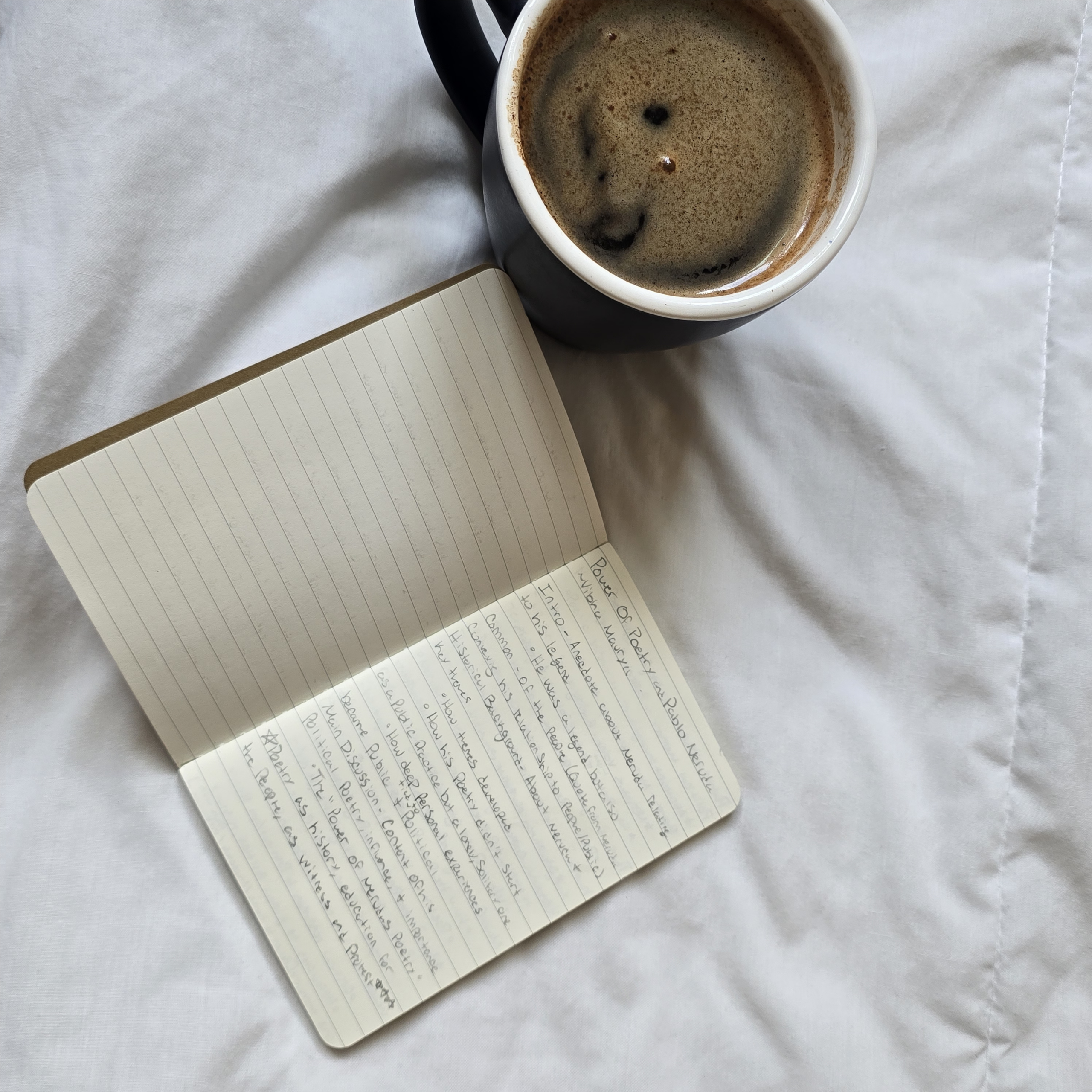
This approach can be all the more fun for journaling. By not restricting yourself to a specific project or idea, you are free to play and see what comes of it. For anyone who struggles to journal, like me, this approach can help develop an exciting, habitual journaling practice. Whether you want to understand your own inner world, capture your stream of consciousness, or develop a daily writing habit, this can be used as a loose framework to get started writing and lets you venture off in whatever direction your writing takes you.
Writing Prompts
Storyboarding, like brainstorming, is a great use of this method. If you are already in the depths of a project and want to, for example, develop a fantasy world, put characters into unique situations, or tell a story that unfolds in a fresh way, then 6 impossible ideas might imaginatively enhance your narrative.
Let’s say you are writing a piece of fiction and want to create a new type of mythical creature. You can use this exercise to come up with the strangest ideas about what that creature looks like, how it functions, and how it contributes to the story. You may find an idea, or a combination of ideas, that leads you to something exciting and original. Alternatively, you could also try something like Lewis Carroll’s Through the Looking-Glass, and create a wholly new world with rules absolutely separate from those in our world, just to see what comes of it!
Conclusion
The world Carroll creates is a reminder of how rigid our world can be, but also how flexible it can be when we set our minds to breaking that rigidity. Relevant things may one day be rendered obsolete, and likewise, something completely unfounded could become essential, something everyone becomes familiar with and can’t live without. Lewis Carroll’s Through the Looking-Glass is filled with a sense of adventure, exploration, and ingenuity that we often lose touch with as we get older.
Instead of following all of the traditional rules when it comes to creativity, work, or rationality, we can use the ideas in this book to re-learn how to play in the world, as if we are in a fantasy or dream. A world in which we are not only the arbiters of our own stories, but inventors and creators with endless tools at our disposal. In our own little fantasy worlds, we can do and think the impossible, and, as Carroll states in the book’s final remarks, “Life, what is it but a dream?”
If you enjoyed the ideas in this article, I would highly recommend reading or rereading Lewis Carroll’s Through the Looking-Glass. It is available free online through Project Gutenberg.